
Observe the water cycle
KS2 · 35 minutes · Explain evaporation, condensation and precipitation using observations.
Answer by: Type. You can change method or take a break at any time.
Page 1 of 30
Our learning goal
Explain evaporation, condensation and precipitation using observations.
Your turn: Choose one thing you would like to understand by the end.
Offline speech needs an installed English device voice.
My lesson notes & project
Full teaching script
- Today: Observe the water cycle. Our goal: Explain evaporation, condensation and precipitation using observations.
- Take one idea at a time. Pause after each sentence; ask for repetition whenever you need it.
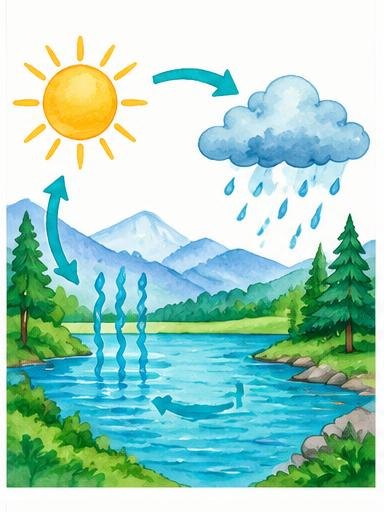
- Liquid water can become water vapour: evaporation. Water vapour is an invisible gas, not the visible cloud above a kettle. When moist air cools, vapour can condense into tiny liquid droplets. Clouds contain droplets or ice crystals. Droplets can grow and fall as precipitation, including rain. Water collects in rivers, lakes and oceans; some soaks into the ground. The Sun supplies energy for much of the evaporation, while gravity moves water downhill. Put a little water in a sealed bag and tape it securely at a bright window. Mark the starting level. Observe over time: droplets may appear above it as vapour condenses. This is a model, not a whole atmosphere. No boiling water is needed. A missing result is still useful: record temperature, light and time before changing a variable.
- Together: choose one example from the explanation and show how it works. What do you notice?
- Your turn: Sketch and label the starting bag. Predict where droplets might appear. Observe later with an adult and record what actually happened. Draw evaporation, condensation, precipitation and collection as a cycle.
- Reflect: what made sense, and what would you like explained differently?
Watch and learn
Videos come only from approved education channels and need internet. Use the arrows in the player for more videos from the same channel.