
Instructions a robot can follow
KS1 · 25 minutes · Create and debug a precise sequence of instructions.
Answer by: Type. You can change method or take a break at any time.
Page 1 of 30
Our learning goal
Create and debug a precise sequence of instructions.
Your turn: Choose one thing you would like to understand by the end.
Offline speech needs an installed English device voice.
My lesson notes & project
Full teaching script
- Today: Instructions a robot can follow. Our goal: Create and debug a precise sequence of instructions.
- Take one idea at a time. Pause after each sentence; ask for repetition whenever you need it.
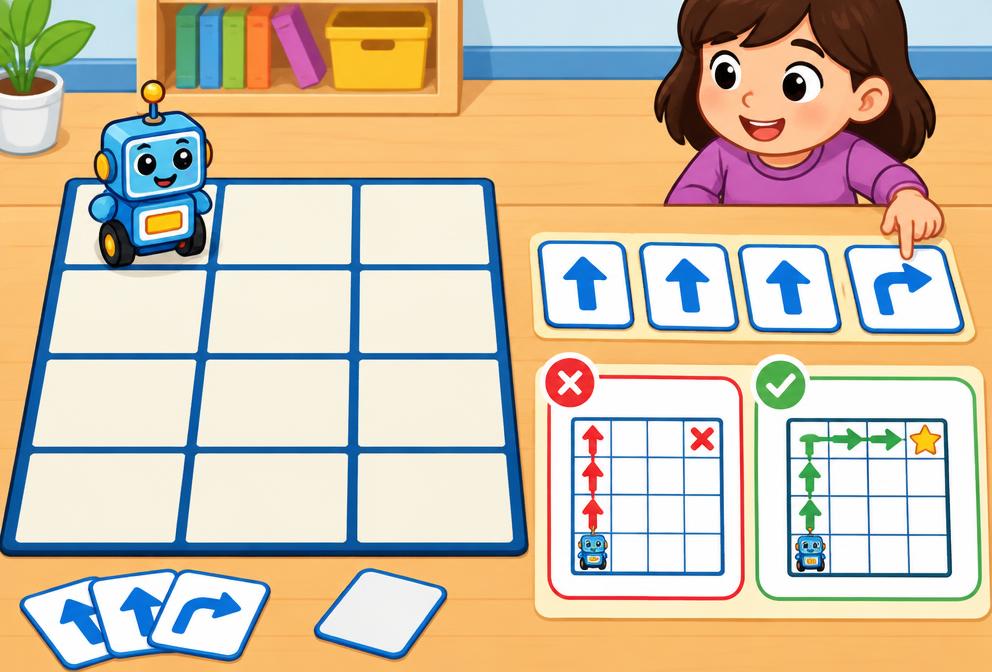
- An algorithm is an ordered set of instructions. Put a toy on a paper grid. Say “move one square forward” rather than “go over there”. Agree which way the toy faces before you begin. Model a route: forward, forward, turn right, forward. A turn changes facing; it does not move the toy into a new square. Test each instruction in order. If the route fails, find the first step that differs from the plan. Changing and testing the instructions is debugging. An error is information, not a reason to blame the learner. Real machines have limits; never test instructions with dangerous equipment.
- Together: choose one example from the explanation and show how it works. What do you notice?
- Your turn: Draw a four-by-four grid and place a start and finish. Write a route. Ask an adult to move the toy exactly as instructed. Fix one incorrect step and test again.
- Reflect: what made sense, and what would you like explained differently?
Watch and learn
Videos come only from approved education channels and need internet. Use the arrows in the player for more videos from the same channel.